The Comprehensive Guide
Future-Proofing Grid Stability: The Ultimate Guide to Distributed Energy Storage Solutions (BESS)
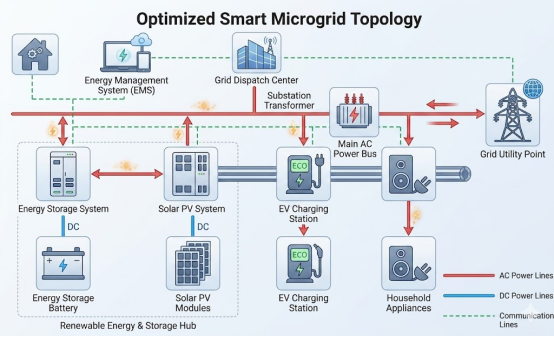
In the current global energy transition, the proliferation of distributed renewable energy has created unprecedented challenges for traditional utility infrastructure. As solar PV integration increases, distribution networks face significant stability hurdles, including voltage fluctuations and transformer thermal stress. Our high-end distributed energy storage solutions (BESS) are engineered specifically to mitigate these challenges at the low-voltage side of distribution transformers.
Understanding the “Cloud Energy Storage” Model
At the core of modern grid architecture lies the distributed energy storage solutions for grids—an innovative approach combining localized energy storage units with advanced cloud-based aggregation. Unlike traditional centralized storage, our approach addresses five distinct pain points: unstable grid voltage, three-phase unbalance, critical transformer overloads, solar power curtailment, and overall low supply reliability.
Scalability and Performance
By utilizing a modular containerized or outdoor cabinet design, our systems are “plug-and-play,” delivering a response time of less than 100ms. This rapid response capability is essential for improving distribution transformer power reliability and solving solar photovoltaic grid integration issues. Our technology supports advanced cloud energy storage management systems, providing unified control for distributed energy units that function as a comprehensive power grid voltage regulation solutions. As we move toward a decentralized future, our system acts as a foundational element for large scale grid stability energy storage], utilizing low voltage side energy storage systems and smart grid energy management and scheduling to deliver integrated renewable energy storage unit technology.
Keywords:
Distributed Energy Storage (BESS), Grid Stability Infrastructure, Solar Photovoltaic Grid Integration, Distribution Transformer Overload, Cloud-based Energy Scheduling, Reactive Power Compensation, Peak Shaving Technology, Virtual Power Plant (VPP), Low Voltage Side Storage, Renewable Energy Grid Resilience, Modular Containerized Storage, Smart Grid Management, Distributed Resource Management, Energy Storage Response Time, Grid Voltage Regulation